
Can There be Decay Under a Filling?
Click to rate this post!
[Total: 0 Average: 0]
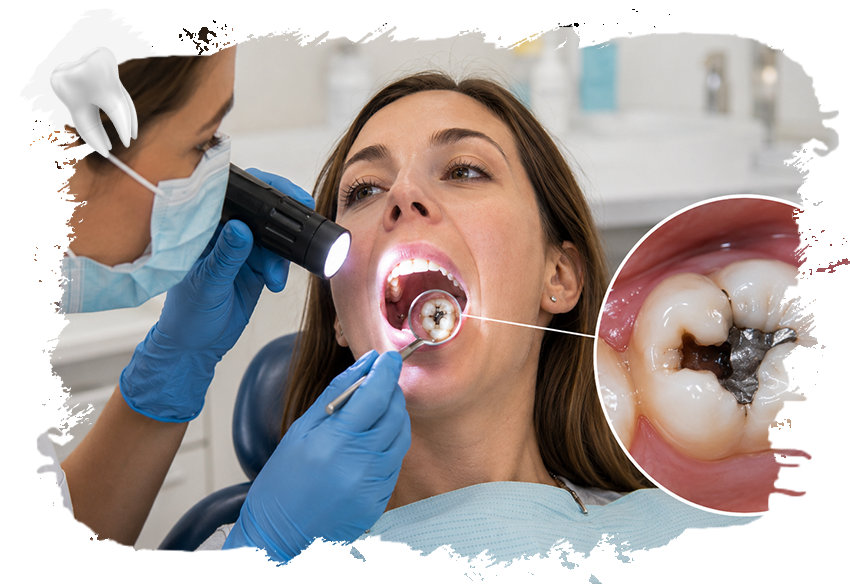
Decay under a filling is a condition that can be seen in teeth with old fillings or fillings that have lost their marginal adaptation. Over time, a filling may wear down, crack, or the bond between the filling and the tooth may weaken. In this case, bacteria can progress beneath the filling. Decay that does not cause symptoms at first may become noticeable as it progresses, with pain, sensitivity, and damage to the filling.
Why Does Decay Develop Under an Old Filling?
Although dental fillings can be used for many years, they should not be considered lifelong restorations. Over time, microscopic gaps may form around the edges of the filling, and wear or small cracks may develop on its surface. Bacteria and food debris entering these areas create an environment that is difficult to clean and may accelerate decay development.
Especially when adaptation loss occurs in the areas where the filling meets the tooth, the risk of decay under the filling increases. Inadequate oral care, frequent sugar consumption, teeth clenching, and breakage of the old filling may also contribute to secondary decay formation.
What Are the Symptoms of Decay Under a Filling?
Decay developing under a filling may not always show symptoms in the early period. As the decay progresses, sensitivity to cold and hot, pain while chewing, bad breath, or discoloration around the edge of the filling may occur. In some people, movement, breakage, or complete loss of the filling may also be a sign of decay.
Is Darkening Around the Filling Edge Always Decay?
Not every color change around a filling means decay. Tea, coffee, smoking, and colored foods may cause superficial staining around the edge of the filling. However, if the darkening is accompanied by sensitivity, pain, or a gap around the filling edge, the tooth should be evaluated in detail.
How Is Decay Under a Filling Detected?
Decay under a filling is detected through an intraoral examination and, when necessary, X-ray images. The dentist checks the edges of the filling, its surface integrity, and its adaptation to the tooth. Dental X-rays may help identify cavities that cannot be seen with the naked eye or that develop between two teeth.
The depth of the decay under the filling is important in planning the treatment. If the decay is limited only to superficial tissues, the old filling can be removed and the decayed area can be cleaned. However, if the decay has approached the tooth nerve, different treatment options may need to be considered.
What Happens If Decay Under a Filling Is Not Treated?
If decay under a filling is not treated, it may progress toward healthy tooth tissues and eventually reach the nerve layer of the tooth.
In this case, pain, sensitivity, difficulty chewing, and swelling may occur. In advanced decay cases, replacing the filling alone may not be sufficient; root canal treatment, a crown, or tooth extraction may be required. Therefore, decay under a filling should be evaluated early.
How Is Decay Under a Filling Treated?
During treatment, the old filling is first carefully removed. Then, the decayed tooth tissues are cleaned, and the remaining healthy tissues are evaluated. If there is enough healthy tooth tissue, a new filling may be applied to the area.
If the decay has spread over a wide area, restorations such as inlays, onlays, or crowns may be preferred instead of a filling. If the nerve tissue of the tooth is affected, root canal treatment may be required. In teeth with advanced tissue loss that cannot be preserved with treatment, extraction may be considered.
Does an Old Filling Need to Be Replaced?
Not every old filling needs to be replaced simply because it has been used for a long time. If the filling is intact, there is no gap around its edges, and no new decay is detected in the tooth, regular check-ups may be sufficient. If the filling is broken, excessively worn, or decay has developed underneath it, renewal may be recommended.
Is There Pain After a Filling Is Replaced?
Mild sensitivity lasting a few days after a filling is replaced may be considered normal. However, if gradually increasing pain, throbbing that begins at night, or sharp pain during chewing occurs, the filling height, nerve tissue, and surrounding tissues should be checked again.
How Can Decay Under a Filling Be Prevented?
Regular toothbrushing, dental floss use, and limiting sugary foods help reduce the risk of decay under a filling. It is important to check filled teeth before pain develops. This is because early-stage cavities can usually be treated with smaller interventions.
In people with a teeth-clenching habit, high chewing forces may develop on fillings. Since these forces may cause cracks and marginal incompatibilities, the use of a night guard may be considered when necessary.
How Often Should Filled Teeth Be Checked?
It is generally recommended that filled teeth be evaluated during dental check-ups performed every six months. The frequency of check-ups may vary according to the person’s decay risk, oral care habits, and the condition of existing fillings. Thanks to regular examinations, decay under a filling, filling fractures, and marginal gaps can be detected at an early stage.
ORAL AND DENTAL HEALTH POLYCLINIC
YOU MAY BE INTERESTED
TREATMENTS THAT YOU CAN RECEIVE

Implant Treatment

Porcelain Laminates

Bonding Application

Orthodontics
Ekiz Oral and Dental Health Polyclinic
We would be happy to help you achieve the smile of your dreams. You can contact us whenever you want.
+90 212 809 47 47
Working Hours: Weekdays 09:00 - 18:00, Weekends 10:00 - 16:00
[email protected]
For any questions and appointments...
Sarıyer/İstanbul
Vadikoru, No:10/A Inner Door No:100
