
Why Does a White Pimple Appear on the Gum?
Click to rate this post!
[Total: 0 Average: 0]
Oral health, especially white pimple lesions, is one of the most important indicators of overall body health. These small and inflamed structures that suddenly appear on the gums may be a sign that the delicate balance of the oral flora has been disrupted or that certain problems are occurring in the body. Since even the slightest bacterial accumulation can create the basis for these destructive reactions, it is always highly important to correctly identify the underlying source of infection and take the appropriate treatment steps without delay through specialist clinical intervention.
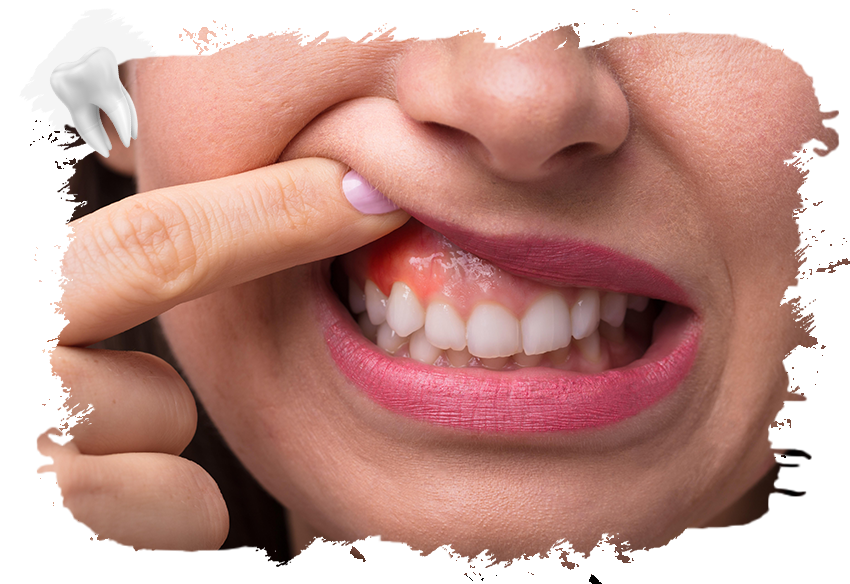
In Which Situations Does a White Pimple Appear?
There may be many different dental and medical problems behind white pimple-like structures that occur on the gums. When the microbiological balance of the oral flora is disrupted or when permanent structural damage develops in the tooth roots, the body may reflect this condition outwardly through a lesion. One of the most common causes is advanced dental abscesses. As a result of damage to the living tissue of the tooth due to external factors, mechanical trauma, or deep cavity formations, inflammation accumulating at the root tip seeks a way out. This inflammation gradually penetrates the bone and soft tissue, reaches the surface of the gum, and appears externally as a pus-filled swelling. In dental literature, this is called a fistula opening. Poor oral hygiene, tartar, and bacterial plaque accumulating for a long time beneath the gum line without being cleaned are also among the main factors that directly trigger this condition.
Which Diseases Can It Indicate?
- Periapical Abscesses: These are inflammatory foci caused by harmful bacteria accumulating in the tooth roots. They may perforate the bone and form a fistula, appearing on the gum as a lesion ready to drain.
- Periodontal Abscesses: These are localized abscessed infections caused by food debris and plaque accumulating for a long time in the gum pockets, swelling the gums and creating a white pimple
- Aphthous Stomatitis Canker Sores: These are ulcers that appear inside the cheeks, on the tongue, or on the gums, with a completely red border and a pale-colored center. They are often directly associated with chronic fatigue and vitamin and mineral deficiencies.
- Oral Thrush Candidiasis: These are infections characterized by the excessive growth of the Candida fungus in the oral flora and may cluster on the gums as localized white spots and plaques.
How Does Fistula Formation Develop?
A fistula is a chronic infection channel frequently encountered in oral surgery and endodontics. When the sensitive nerves inside the tooth completely lose their vitality and pathogenic bacteria settle in this area, an intense inflammatory focus forms at the root tip. To relieve this severe inflammatory pressure and anatomically limit the infection, the body creates a drainage channel from inside the jawbone toward the gum tissue outside.
How Does the White Pimple Inflammation Process Begin?
When early-stage tooth decay is left untreated, bacteria can reach the pulp chamber, the innermost layer of the tooth. Microorganisms that multiply rapidly in this closed space progress toward the root tip and initiate an active inflammatory accumulation within the bone, known as a purulent exudate. This dangerous buildup gradually turns into pressure that increases over time and mechanically strains the tissues, beginning to erode the surrounding healthy bone structures.
How Does the Infection Spread?
Although this problem may appear localized and small, it tends to spread rapidly to surrounding healthy tissues if professional intervention is not performed urgently. The small, innocent-looking swelling on the gum surface is actually only the visible part of a much larger and more destructive underlying problem. Therefore, it is critically important for every patient with a fistula lesion to undergo an urgent clinical examination as soon as possible.
How Can Bone Loss Be Prevented?
Inflammation that becomes chronic over months or years gradually erodes and destroys the surrounding supporting bone tissue. This irreversible resorption in the alveolar bone that securely surrounds the tooth may cause the infected tooth to loosen over time and eventually lead to tooth loss through extraction. The most effective known way to completely stop this destruction and reverse the process is to mechanically and chemically disinfect the source of infection in a clinical setting.
How Can It Be Distinguished from Canker Sores?
- Difference in Physical Reaction: Lesions caused by an abscess at the root tip lead to very severe and deep pain, while canker sores usually create an immediate burning sensation upon food contact in that area.
- Differences in Content: Abscessed fistula structures contain an active microbial infection within them, and when pressure is applied, foul-smelling fluid discharge may occur. Canker sores, on the other hand, are empty, superficial mucosal losses that do not contain fluid.
- Visual and Physical Structure: True abscessed fistulas are swollen, edematous, quite red and sensitive to touch, whereas canker sores are flatter at the mucosal level and appear as whitish, slightly depressed lesions surrounded by a red halo.
- Healing Time: Immune-related canker sores usually heal within 7 to 14 days without any external medication or treatment, while infection-related structures in the form of white pimples are clinically impossible to heal without professional medical intervention by a dentist.
What Are the Risk Factors?
- Poor Oral Care: Not brushing the teeth regularly on a daily basis and never using dental floss create an ideal environment for pathogenic bacteria in the mouth to multiply and colonize rapidly on the gums.
- Nutritional Deficiencies: Deficiencies of essential vitamin B12, iron, and folic acid in the human body reduce the natural cellular resistance of the mucosa lining the inside of the mouth, directly accelerating both ulcerative lesion formation and infection-related white pimple
- Weak Immune System: Severe chronic stress, insomnia, and systemic diseases in modern life reduce the ability of the body’s defense cells to fight infections, directly triggering these inflammatory formations in the mouth.
- Mechanical and Physical Trauma: Permanently damaging the tissues by brushing with the wrong technique and hard-bristled brushes, using ill-fitting removable dentures that do not adapt properly to the mouth, or hard-shelled foods pressing sharply into the gums can completely disrupt gingival tissue integrity.
What Are the Clinical Treatment Methods?
An infection-related white pimple seen on the gum should never be squeezed by hand at home, burst through physical intervention, or tampered with using sharp, non-sterile objects such as toothpicks, needles, or similar items. Such uncontrolled amateur interventions performed by patients on their own may cause the local infection to enter the general blood circulation and spread rapidly to deeper vital tissues in the body. In this medical condition, the safest and most appropriate approach is to undergo detailed radiological jaw imaging without delay and consult a well-equipped dentist for a physical specialist examination.
What Are Endodontic Treatments?
If the main problem behind the pimple-like structure is caused by necrotic and dead tissue in the tooth root, the most valid method applied in dentistry is advanced root canal treatment. During this highly precise microsurgical procedure, the diseased and infected pulp tissue inside the tooth is completely cleaned down to the root tip using special titanium micro-instruments, washed with strong antibacterial solutions, and the emptied root canals are sealed in an airtight and leak-proof manner using biocompatible filling materials. When this root revision procedure is successfully completed, the fistula structure on the gum subsides within just a few days and disappears completely without leaving a trace, because the source of inflammation is eliminated from the bone tissue.
What Are Periodontal Approaches?
If the source of the problem is not the pulp but diseases originating from the gum pockets, a more superficial yet equally meticulous clinical protocol is followed in treatment. Deep professional gum cleaning and detailed root surface planing curettage procedures are performed to carefully remove tartar and infected granulation tissues that remain deep inside the gum pocket and produce infection. When necessary throughout the treatment process, special intraoral antibiotic gels applied directly into the tissue pocket by the dentist and medical mouthwashes containing antimicrobial agents suitable for home use are prescribed, supporting the patient’s cellular healing process in a multidimensional and powerful way.
ORAL AND DENTAL HEALTH POLYCLINIC
YOU MAY BE INTERESTED
TREATMENTS THAT YOU CAN RECEIVE

Implant Treatment

Porcelain Laminates

Bonding Application

Orthodontics
Ekiz Oral and Dental Health Polyclinic
We would be happy to help you achieve the smile of your dreams. You can contact us whenever you want.
+90 212 809 47 47
Working Hours: Weekdays 09:00 - 18:00, Weekends 10:00 - 16:00
[email protected]
For any questions and appointments...
Sarıyer/İstanbul
Vadikoru, No:10/A Inner Door No:100
