
Turkey Teeth: What It Means, the Risks and How to Get a Natural Result
Click to rate this post!
[Total: 1 Average: 5]
Turkey Teeth
Crowns, Veneers and Natural Results
“Turkey teeth” has become a familiar phrase in the UK whenever cosmetic dentistry comes up. It usually brings to mind a row of very white, very even teeth, and increasingly also stories of treatment that went wrong. As a dental clinic in Istanbul we are often asked about it, so this article sets out what the term means, how crowns differ from veneers, what UK dentists report and what to check before any smile makeover, wherever you decide to have it.
The short version: a natural, long-lasting result depends far less on the country than on the plan. The key questions are how much healthy tooth is removed, whether gum disease and bite problems are treated first, and whether aftercare is in place.
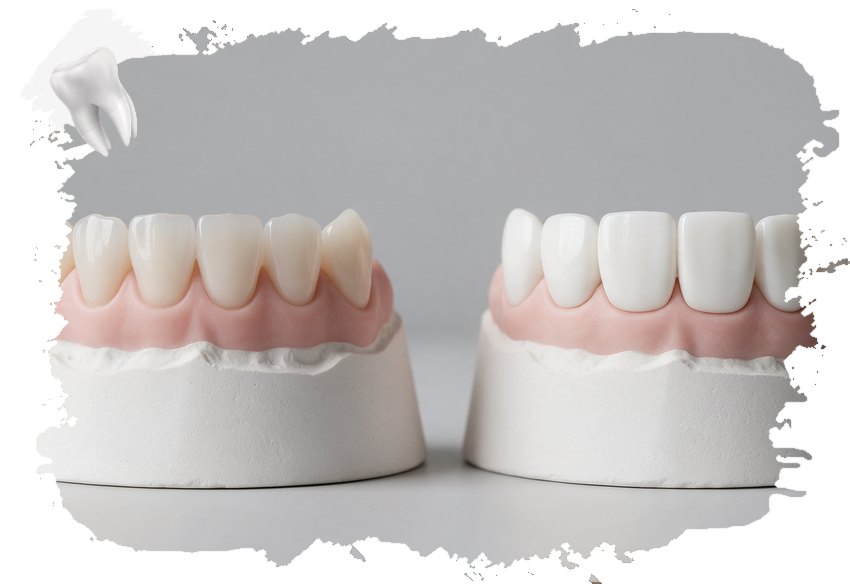
What Does “Turkey Teeth” Mean?
The phrase was popularised by UK media to describe people travelling to Turkey for cosmetic dental work; a 2022 BBC report noted that the trend “has been dubbed ‘Turkey teeth’”. Reality television played a large part. One of the best-known early examples was a Love Island winner who travelled to Turkey for 10 crowns before entering the villa in 2018.
In everyday use the term usually refers to a full set of bright white crowns placed on front teeth that were often healthy. One patient interviewed by the BBC believed she was having veneers and only discovered months later that she had been given crowns. At the same time, the same report stressed that not all patients return with complications, and a review of UK newspaper coverage found that tabloids often stigmatised people who had dentistry abroad (Doughty et al., 2025). The phrase is therefore best understood as a warning about a particular kind of treatment plan, not about a country.
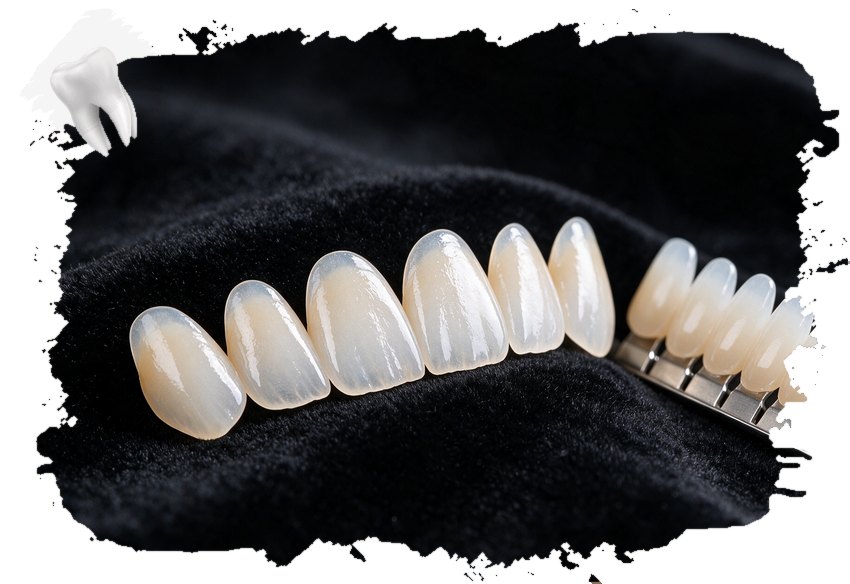
Crowns and Veneers Are Not the Same
A veneer is a thin shell, usually porcelain, bonded to the front surface of a tooth. A crown covers the whole tooth, so the tooth has to be reduced on every side to make room for it.
The difference in how much tooth is removed is large. In a laboratory study on model teeth, preparations for all-ceramic and metal-ceramic crowns removed roughly 63-72% of the visible tooth structure, compared with roughly 3-30% for veneer designs. A metal-ceramic crown required 4.3 times more tooth removal than a traditional veneer (Edelhoff and Sorensen, 2002). Real teeth vary, but the principle is clear: a crown is a much bigger and permanent step.
Crowns are the right choice for some teeth, for example heavily filled, broken or root-canal-treated teeth. Read more on our dental crowns and porcelain veneers pages.
Why Over-Prepared Teeth Matter
Enamel that is removed does not grow back. Once a healthy tooth has been prepared for a crown it will need a crown for the rest of its life, and each replacement over the years removes a little more.
Preparing a tooth also carries a small risk to the nerve (pulp). A 2023 systematic review of 37 studies found that pulp necrosis followed indirect restorations such as crowns in about 5% of teeth overall, rising to about 6.7% after more than 10 years; the authors described these rates as low, with low-certainty evidence (Al-Manei et al., 2023). In a prospective study cited in that review, the rate was 5% for intact teeth and 13% for teeth that were already structurally compromised (Kontakiotis et al., 2015).
A few per cent sounds small, but when ten or more healthy front teeth are crowned at once, the chance that at least one of them later needs root canal treatment adds up. This is one reason why dentists are cautious about crowning healthy teeth for purely cosmetic reasons.
What UK Dentists Report
In a 2022 British Dental Association (BDA) survey of 1,000 UK dentists, 94% said they had examined patients who had gone abroad for dental treatment. Of these dentists, 86% had treated cases that developed problems, and crowns (87%) and implants (85%) were named as the treatments most likely to need follow-up work. The most common problems were failing or failed treatment (86%), pain (76%) and poorly executed treatment (72%). The dentists also raised concerns about continuity of care (93%) and the difficulty of making a complaint (77%).
These figures describe how many dentists have seen problems, not how many patients have them; as the BBC noted, it is not known how many people from the UK have had such treatment abroad. Still, the pattern is consistent: the problems UK dentists describe most often involve over-prepared teeth, treatment carried out despite untreated gum disease, and a lack of follow-up.
What a Natural Result Looks Like
A smile that looks natural rarely comes from the brightest shade on the chart. The details that make the difference are:
- A realistic shade: bright but in harmony with your skin tone, the whites of your eyes and your age.
- Translucency: natural teeth let light through at their edges; opaque, flat white looks artificial.
- Individual shapes: slight differences in length and outline between teeth, rather than identical blocks.
- Proportion: teeth sized to your face and lips, not thick or bulky.
- Healthy gums: a clean, even gum line with no inflammation around the edges.
A good plan lets you see the new shape before anything is done to your teeth, using digital smile design and a trial smile (mock-up) in the mouth.
Conservative Options Come First
Many people who ask for “Turkey teeth” can reach the look they want with far less treatment. Options are usually considered in this order:
- Teeth whitening for colour, with no tooth removal.
- Composite bonding for small chips, gaps and shape problems.
- Clear aligners or braces for crowding, so teeth are moved rather than cut.
- No-prep or minimal-preparation porcelain veneers for bigger changes in colour and shape.
- Crowns only for teeth that genuinely need them.
Veneers that are bonded mainly to enamel have a good long-term record. A systematic review of 25 studies with 6,500 veneers estimated 10-year survival at 95.5% (Alenezi et al., 2021), and a 2025 review reported survival above 93% at about 10 years for feldspathic, leucite-reinforced and lithium disilicate veneers (Klein et al., 2025). Keeping enamel matters: in a study of 672 veneers followed for up to 15 years, survival was 96.7% when veneers were bonded to enamel only, compared with 93.9% when more than 30% of dentin was exposed (Etienne et al., 2025). A smaller study found no failures among no-prep or minimal-prep veneers over an average of about nine years (Smielak et al., 2022).
Questions to Ask Before Treatment Abroad
The UK General Dental Council (GDC) and the NHS both publish advice for people considering treatment abroad. Based on that advice, it is worth asking:
- Who will carry out my treatment, and what qualifications do they have? Are they registered with a professional regulator?
- Will I be examined by a dentist, with my medical history reviewed, before I am given a treatment plan?
- Are you proposing crowns or veneers, how much of my teeth will be removed, and is there a less invasive option?
- Will gum disease or decay be treated first?
- Is the work guaranteed, what aftercare do you provide, and who do I contact after I get home?
- Do you have a complaints procedure I can see?
- How long should I stay before travelling home?
It is also sensible, as practical advice rather than an official rule, to ask for copies of your X-rays, treatment notes and the materials used, so any dentist can look after your teeth later.
The NHS lists warning signs to take seriously: a hard sell, a lack of information, pressure to make a quick decision, no discussion of possible complications and no mention of aftercare. If problems arise after private treatment abroad, NHS dental services can assess and stabilise your condition, but self-funded cosmetic work would not usually be replaced (NHS England, 2024).
How We Approach a Smile Makeover at Ekiz Clinic
Our approach follows the same principles described above:
- Every plan starts with an in-person examination and, where needed, X-rays. Decay, gum disease and grinding are treated before any cosmetic work.
- We start from the least invasive option and explain which treatments remove tooth structure and how much.
- Full crowns are kept for teeth that need them; healthy teeth are not crowned for cosmetic reasons alone.
- You can see and change the design of your new smile before treatment, using a digital plan and a mock-up.
- Cases are planned with our specialists in gum health, orthodontics and root canal treatment; you can meet the team on our doctors page.
If you are considering treatment, our What to Expect page explains how a visit is organised, and our aesthetic dentistry guide describes the options in more detail.

Turkey Teeth: Frequently Asked Questions
Are “Turkey teeth” crowns or veneers?
In most of the cases discussed in the UK media they are full crowns, often placed on healthy front teeth. Some patients believed they were getting veneers. Veneers cover only the front of the tooth and remove much less tooth structure than crowns.
Can veneers be done without filing the teeth?
In suitable cases, yes. No-prep and minimal-preparation veneers keep the tooth almost entirely intact. Whether they are possible depends on the position, size and colour of your teeth, which is assessed at the examination.
How long do porcelain veneers last?
Systematic reviews report around 95% of porcelain veneers still in place after about 10 years, and veneers bonded mainly to enamel do best. Grinding, biting hard objects and poor oral hygiene shorten their life.
Can a crowned tooth go back to having a veneer?
No. Once a tooth has been reduced for a crown, the removed enamel cannot be replaced, so the tooth will need a crown again whenever the old one is renewed. This is why it is worth considering conservative options first.
What should I do if I have a problem after returning home?
Contact the clinic that treated you first, as it is responsible for its own aftercare. In the UK, NHS dental services can assess and stabilise urgent problems, but they would not usually replace self-funded cosmetic work.
Is it safe to have dental treatment in Turkey?
As anywhere, it depends on the clinic, the dentist and the plan. Check qualifications and registration, make sure you are examined before a plan is made, ask whether less invasive options exist and confirm how aftercare works. Many patients are happy with their results; the problems reported by UK dentists mostly involve over-preparation and a lack of follow-up.
Sources
- BBC News. Turkey teeth: Are cut-price reality TV teeth worth it? 14 July 2022. bbc.co.uk/news/health-62100044
- British Dental Association. UK dentists picking up the pieces from dental tourism boom. 2022. bda.org
- Doughty J, Moore D, Ellis M, et al. Contemporary dental tourism: a review of reporting in the UK news media. Br Dent J. 2025;238(4):230. doi:10.1038/s41415-025-8330-2
- Edelhoff D, Sorensen JA. Tooth structure removal associated with various preparation designs for anterior teeth. J Prosthet Dent. 2002;87(5):503-509. doi:10.1067/mpr.2002.124094
- Al-Manei KK, Alzaidi S, Almalki G, Al-Manei K, Almotairy N. Incidence and influential factors in pulp necrosis and periapical pathosis following indirect restorations: a systematic review and meta-analysis. BMC Oral Health. 2023. doi:10.1186/s12903-023-02826-1
- Kontakiotis EG, Filippatos CG, Stefopoulos S, Tzanetakis GN. Int Endod J. 2015;48(6):512-517. doi:10.1111/iej.12340
- Alenezi A, Alsweed M, Alsidrani S, Chrcanovic BR. Long-term survival and complication rates of porcelain laminate veneers in clinical studies: a systematic review. J Clin Med. 2021;10(5):1074. doi:10.3390/jcm10051074
- Klein P, Spitznagel FA, Zembic A, et al. Survival and complication rates of feldspathic, leucite-reinforced, lithium disilicate and zirconia ceramic laminate veneers: a systematic review and meta-analysis. J Esthet Restor Dent. 2025;37(3):601-619. doi:10.1111/jerd.13351
- Etienne O, Wang CJ, Bourgi R, Watzki D, Roman T. J Esthet Restor Dent. 2025;37:2519-2532. doi:10.1111/jerd.70016
- Smielak B, Armata O, Bojar W. Clin Oral Investig. 2022;26(3):3049-3059. doi:10.1007/s00784-021-04289-6
- General Dental Council. Going abroad for dental treatment. gdc-uk.org
- NHS. Treatment abroad checklist. Reviewed 19 November 2023. nhs.uk
- NHS England. Avoidance of doubt: clinical policy for self-funded dental treatment requiring NHS intervention (PRN00784). 4 November 2024. england.nhs.uk
ORAL AND DENTAL HEALTH POLYCLINIC
YOU MAY BE INTERESTED
TREATMENTS THAT YOU CAN RECEIVE

Implant Treatment

Porcelain Laminates

Bonding Application

Orthodontics
Ekiz Oral and Dental Health Polyclinic
We would be happy to help you achieve the smile of your dreams. You can contact us whenever you want.
+90 212 809 47 47
Working Hours: Weekdays 09:00 - 18:00, Weekends 10:00 - 16:00
[email protected]
For any questions and appointments...
Sarıyer/İstanbul
Vadikoru, No:10/A İç Kapı No:100
