
Current Approach to Patients with Dental Treatment Anxiety
Click to rate this post!
[Total: 0 Average: 0]
Contrary to popular belief, fear of dental treatment is not only in children; it is also quite common in adults. Many people postpone visiting the dentist for years and only go when the pain becomes unbearable. This delay both complicates the treatment and increases the cost. Modern dentistry now offers painless, controlled, and patient-centered approaches. With the right method and communication, the treatment process can become much more comfortable for patients. The sole cause of this fear is not “pain.” It is often fueled by a past negative experience, sensory triggers (drill sounds, antiseptic smells), the feeling of losing control, or fear of an unknown procedure.
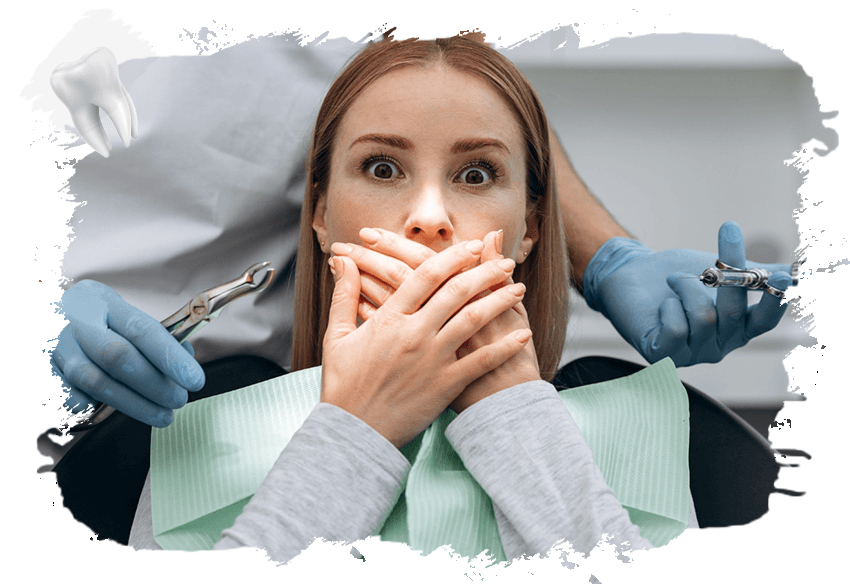
Some patients do not want to be alone in the chair; others experience anxiety related to the needle and anesthesia. Understanding the source of the problem is critical for choosing the right treatment approach.
Fear Management Approaches in Modern Dentistry
Nowadays, patients’ psychological comfort is considered as important as the technical success of the treatment. Before the procedure, the patient is explained in detail “how long each step will take, what they will feel, and how the anesthesia will be applied.” This transparency gives control back to the patient and significantly reduces anxiety.
Thanks to digital dentistry, the diversification of local anesthesia options, sedation and anesthesia methods, shorter procedure times, and ergonomic equipment, the era of the “suffering patient” is now coming to an end.
Trust Approaches Used During the Treatment Process
- Painless anesthesia techniques
- Local drugs that reduce sensitivity
- Visualization of the process with digital planning
- Sedation options
- Stepwise treatment plan
These approaches give the patient a sense of “I am in control.” For example, allowing the patient to determine when to take a break during the procedure significantly reduces anxiety. In some patients, a short and simple procedure is performed first, and after creating a positive experience, longer procedures are undertaken. In this way, treatment becomes not only a mechanical process but also a psychological adaptation process.
Mild sedation, anxiolytic support, or general anesthesia are effective solutions for patients with high fear levels, a history of trauma, or those requiring long procedures. During treatments under sedation, the patient is conscious, calm, does not feel pain, and does not remember the process. This is a particularly safe option for individuals with needle phobia or low tolerance for long procedures in the mouth.
Feeling comfortable in the dental chair is not achieved solely with technical equipment; doctor-patient communication is the most powerful tool here. Listening to the patient’s concerns, understanding trigger points, and showing empathy increase the chances of treatment success. In some cases, breathing exercises, relaxation techniques, and even behavioral therapy support can be integrated into the treatment.
Preparations and Habits Starting at Home
Even short preparations before treatment can reduce anxiety. For example:
- Choosing an early morning appointment
- Not skipping meals, eating lightly
- Doing breathing exercises
- Getting information first, then starting the procedure
These small steps lower the brain’s perception of risk and allow the treatment process to proceed more controlled.
Today in dentistry, intraoral scanners, digital simulations, laser-assisted procedures, and precision injection tips are used. Patients can see the condition of their mouth on a screen before the procedure starts. This way, the “fear of the unknown” is replaced by a concrete, understandable, and predictable process.
The clinical environment, perception of sterilization, sound, and lighting are even designed with the patient’s psychology in mind.
ORAL AND DENTAL HEALTH POLYCLINIC
YOU MAY BE INTERESTED
TREATMENTS THAT YOU CAN RECEIVE

Implant Treatment

Porcelain Laminates

Bonding Application

Orthodontics
Ekiz Oral and Dental Health Polyclinic
We would be happy to help you achieve the smile of your dreams. You can contact us whenever you want.
+90 212 809 47 47
Working Hours: Weekdays 09:00 - 18:00, Weekends 10:00 - 16:00
[email protected]
For any questions and appointments...
Sarıyer/İstanbul
Vadikoru, No:10/A İç Kapı No:100
