
Thumb Sucking Habits Damage Tooth Structure!
Click to rate this post!
[Total: 0 Average: 0]
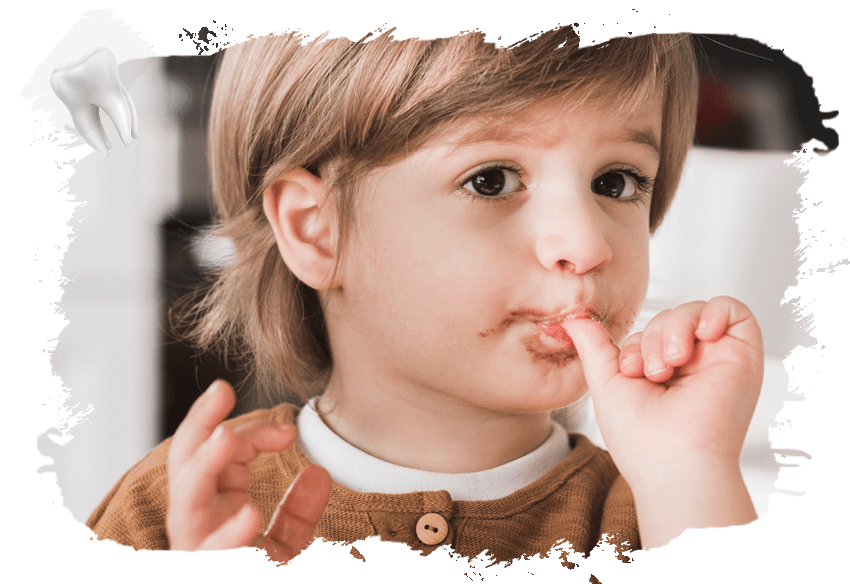
Thumb sucking is a very natural and expected reflex behavior during infancy. Newborns bring their fingers or hands to their mouths to calm themselves and fall asleep. This habit usually disappears spontaneously in most children between ages 2 and 4. However, if this behavior persists persistently after age 4, it can cause permanent issues in oral and jaw development.
Although thumb sucking is often dismissed as “it will pass with time,” prolonged habits can lead to crooked teeth, narrow upper jaws, and bite problems. Therefore, early detection and proper guidance are very important.
When Does Thumb Sucking Become a Problem?
Not all thumb sucking is harmful. What matters is the duration and intensity of the habit.
After age 4:
- If the thumb is frequently brought to the mouth
- If there is strong sucking force
- If the fingertip has calluses
- If the child develops a lisp in speech
pressure begins to form on the teeth and jaw, which alters the direction of developing tissues.
Effects of Thumb Sucking on Teeth and Jaw Structure
The thumb creates constant pressure between the palate and teeth. Over time, this mechanical effect can cause:
Protruding upper front teeth
Teeth are pushed forward, creating a “bunny teeth” appearance.
Open bite
Upper and lower front teeth do not touch when biting, leaving a gap in the front.
Narrow upper jaw and high palate
The thumb pushes the palate upward, causing jaw narrowing and a “tent-shaped” palate appearance.
Perceived retrusion of the lower jaw
As the upper jaw moves forward, the lower jaw appears set back.
These changes lead not only to aesthetic issues but also functional problems. Chewing patterns may be disrupted, breathing may be affected, and speech sounds can be altered.
Why Might It Not Stop? (Psychological and Behavioral Factors)
Some children use thumb sucking as a tool for emotional comfort. It can be particularly triggered or prolonged during:
- Periods of anxiety and stress
- The birth of a sibling
- Separation events, such as the mother starting work
- Bedtime routines
In such cases, the habit should be viewed not just as a mechanical behavior but as an emotional need.
When Should You See a Dentist?
You should consult a pediatric dentist in the following situations:
- The habit continues after age 4
- Noticeable protrusion of the teeth is observed
- The child has difficulty with speech sounds
- Breathing occurs through the mouth
- The fingertip is irritated
The dentist can provide support with intraoral protective devices, behavior guidance techniques, and, if necessary, orthodontic appliances.
The Importance of Early Intervention
When the thumb sucking habit is detected early, intervention can occur while the jawbones are still malleable, preventing most problems from developing.
If the habit continues, the need for orthodontic treatment may become inevitable later.
If your child has this habit, it should be viewed not as a source of concern but as a manageable process that can be corrected with proper guidance.
Timely support is the most important investment for healthy jaw development, functional chewing, and an aesthetically pleasing smile.
ORAL AND DENTAL HEALTH POLYCLINIC
YOU MAY BE INTERESTED
TREATMENTS THAT YOU CAN RECEIVE

Implant Treatment

Porcelain Laminates

Bonding Application

Orthodontics
Ekiz Oral and Dental Health Polyclinic
We would be happy to help you achieve the smile of your dreams. You can contact us whenever you want.
+90 212 809 47 47
Working Hours: 09:00 - 19:00
[email protected]
For any questions and appointments...
Sarıyer/İstanbul
Vadikoru, No:10/A İç Kapı No:100
